 VOJIN
VOJIN
1. The Czech Industrial Landscape: High-Purity Nitrates as Catalysts for Economic Growth
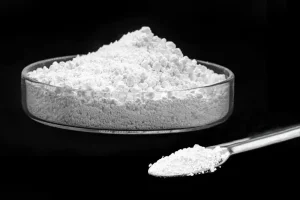
The Czech Republic stands as one of Europe's most heavily industrialized nations, maintaining a rich heritage in heavy metallurgy, mechanical engineering, precision optics, and automotive components. Within this advanced industrial system, high-purity chemical compounds play a vital role. In particular, the Nitrates Series—encompassing industrial-grade potassium nitrate, sodium nitrate, and calcium nitrate—serves as a primary raw material across diverse value chains.
From the world-renowned Bohemian crystal glass factories in Liberec to the metallurgical heat treatment centers of Ostrava, Czech manufacturers require inorganic chemicals that meet rigorous European quality guidelines. Trace impurities in nitrate formulations, such as iron or heavy metals, can compromise the structural integrity of safety glass, alter the optical properties of lenses, or cause oxidation failures in molten heat-treatment baths. Shanxi Vojin New Materials Co., Ltd. addresses this gap by utilizing high-purity synthesized precursors that satisfy the requirements of high-precision European manufacturing.
Bohemian Glass Clarification & Toughening
For high-end crystal and safety glass production, Potassium Nitrate acts as a crucial refining and decolorizing agent. The low iron content in our Nitrates Series ensures zero coloration, yielding crystals with optimal refractive indices and high physical strength.
2. The European Energy Transition & Molten Salt Energy Storage (TES)
As the European Union drives toward carbon neutrality, Central Europe—and the Czech Republic in particular—is updating its energy portfolio. Transitioning away from traditional coal-fired power stations toward solar, wind, and nuclear generation requires utility-scale thermal energy storage (TES) solutions to stabilize national grids.
Molten salt thermal energy storage represents a mature technology for Concentrated Solar Power (CSP) systems and grid-scale industrial thermal storage. Commonly utilizing a binary eutectic mixture of 60% Potassium Nitrate and 40% Sodium Nitrate (known as Solar Salt), this medium operates reliably at temperatures exceeding 560°C. This allows it to store heat during solar peaks and generate high-pressure steam for electricity production when demand rises. Crucially, the chemical stability, low corrosivity, and thermal capacity of the molten salt depend directly on minimizing impurities like chlorides, carbonates, and moisture, which can degrade storage vessels and pumps.