Explore our high-purity inorganic chemical catalog refined for specialized manufacturing and environmental applications.
In modern chemical synthesis, the classification of "by-products" has undergone a profound paradigm shift. Historically regarded as waste streams requiring costly treatment and disposal, secondary outputs are now recognized as essential raw materials that drive resource optimization and industrial sustainability. The contemporary global supply chain for inorganic salts—ranging from potassium carbonate to specialized nitrites and fertilizer precursors—increasingly relies on advanced recovery and refinement protocols to transform process outputs into high-purity commercial compounds.
This transition is governed by strict chemical engineering criteria. For factories and suppliers worldwide, isolating, purifying, and scaling by-products requires a deep integration of fractional crystallization, multi-effect evaporation, and catalytic filtration. Vojin New Materials, as an industry pioneer since 2000, has constructed sophisticated chemical loops that capture value at every stage. For example, during bulk synthesis of thermal energy storage compounds, key secondary mineral derivatives are refined into valuable fertilizers and industrial catalysts, demonstrating that a modern chemical factory operates not on linear throughput, but on circular efficiency.
"True efficiency in chemical manufacturing is reached when the distinction between prime products and secondary outputs vanishes, giving rise to an integrated ecosystem of functional inputs."
Regionally, the market structure reflects localized demands and raw material dynamics. In Asia, heavy manufacturing, electronics, and agricultural output drive massive demands for compounds like food-grade potassium carbonate and potassium chloride. Conversely, Western markets focusing on high-density energy transition solutions demand bulk thermal salts and lithium derivatives. Suppliers must maintain a highly dynamic supply network capable of altering physical purification states—from industrial-grade agricultural powders to granular food-grade reagents—while remaining strictly compliant with global environmental legislation.
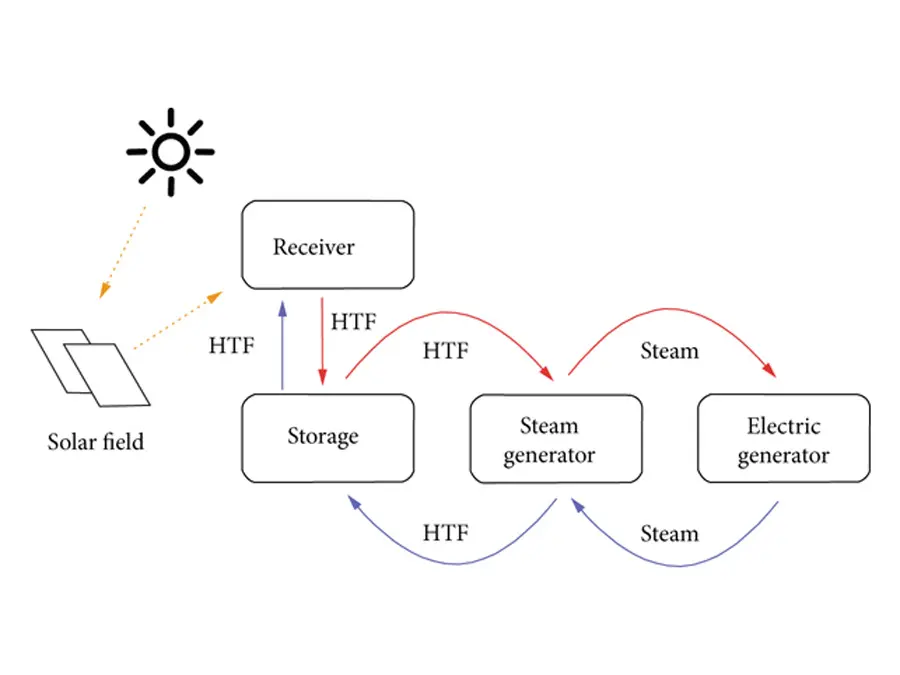
Two primary vectors guide the current expansion of the by-product sector: the rapid global transition to clean energy systems and stringent international decarbonization policies. As nations deploy aggressive net-zero frameworks, the demand for Concentrated Solar Power (CSP) systems and industrial thermal battery installations has surged. This transition directly impacts the supply and demand matrices of high-temperature molten salts, particularly sodium nitrate and potassium nitrate.
Furthermore, the introduction of carbon border adjustment taxes and global ESG disclosure requirements forces factories to minimize their environmental footprints. By integrating advanced co-product recovery systems, manufacturing units drastically reduce their chemical emissions while generating new revenue lines. The synthesis of high-purity compounds like lithium carbonate and calcium nitrite serves a dual role: resolving hazardous waste accumulation at source and supplying critical components to green technologies like battery manufacturing and eco-friendly concrete systems.
To meet these evolving market dynamics, producers are upgrading factories to support automated, real-time chemical composition monitoring. Impurity control is the critical metric in modern SEO-driven product optimization. Commercial buyers search for precise technical terms like "low-chloride potassium carbonate" or "anhydrous sodium nitrite". By refining crystallization kinetics to remove heavy metals and halides, suppliers are successfully elevating basic industrial by-products to certified food and electronic-grade reagents.
Strategic product divisions engineered to deliver high thermal performance, agricultural growth, and chemical precision.
Delivering high-performance chemical formulations across multi-sector industrial operations.
Eutectic salt formulations designed to store solar heat and convert power for renewable grid applications.
High-purity potassium salts used as clarification agents in screen glass manufacturing and optical substrates.
Catalytic chemical additives improving combustion efficiency, gas cleanups, and heat transmission processes.
Targeted water-soluble crop nutrients that maximize fertilizer efficiency and crop resistance across diverse climates.
Deploying inorganic by-products requires adapting material characteristics to target operating conditions. Across various global industries, specific chemical products play vital roles in optimization. For instance, in thermal energy storage installations located in arid solar regions, high-temperature molten salts act as critical thermal buffers. The precise mixture of nitrates enables solar generation grids to continuously feed electricity back to local transmission lines, maintaining grid parity throughout non-solar hours.
In display manufacturing hubs across Asia, ultra-pure potassium carbonate acts as a defining raw material for specialized glass. Modern electronic touchscreens require optical-grade glass substrates that must remain structurally sound yet flexible. The presence of trace sodium or chloride impurities within the potassium stream can degrade glass clarity and mechanical strength during tempering processes. By sourcing refined chemical products with specialized impurity controls, optical manufacturers achieve yield improvements and decrease production rejection rates.
Simultaneously, agricultural economies depend heavily on localized fertilizer blends. Traditional broad-spectrum soil fertilization is increasingly replaced by localized micro-irrigation systems. High-solubility, pure monoammonium phosphate and potassium nitrate formulations prevent drip-nozzle scaling while providing precise nitrogen, phosphorus, and potassium delivery. This application optimizes nutrient delivery to crop roots, reduces water wastage, and avoids regional soil calcification.
As chemical processing becomes cleaner and highly digitized, the engineering roadmap for by-product refinement focuses on zero-waste targets and continuous crystallization. The goal is to design manufacturing units that function with close-to-zero output loss, transforming every process stream into a standardized commercial product.
Implementation of automated sensor-driven crystallization loops to isolate complex multi-salt mixtures. Real-time control of cooling curves enables high-efficiency isolation of potassium and sodium nitrates with less than 0.05% impurities.
Integrating by-product processing units with localized renewable energy generation. By utilizing solar steam for multi-effect crystallization systems, the carbon footprint of critical chemical compounds is reduced by over 35%.
Deploying ion-selective membranes to recover high-value trace elements like lithium and rubidium directly from wastewater streams, allowing complete resource recycling within industrial chemical parks.
Driven since 2000, Shanxi Vojin New Materials has been committed to the entrepreneurial spirit and passion for innovation. Our team takes pride in delivering dependable products and services with a quality distinction in thermal energy storage & water-soluble fertilizer industries globally. The company was established in 2010 to scale output and cater directly to international clean energy and high-purity industrial chemical sectors.
Why leading industrial brands choose Vojin New Materials as their primary supply partner.

Integrated experience on exporting operations. We always assure our customers receive top-tier, reliable quality parameters.
Annual output of 600,000 tons of high-grade molten salts, ensuring bulk delivery availability for macro projects.
Experienced technology support and a dedicated service team providing quick responses to our customers' requests.
Multiple items for selection, such as KNO3 and NaNO3, custom-packaged to meet the requirements of various chemical applications.
Navigating the chemical supply chain requires addressing complex global logistical challenges. Procuring industrial salts involves managing strict compliance frameworks, volatile cargo requirements, and packaging integrity standards. Vojin New Materials provides integrated bulk-shipment solutions that mitigate transport and storage degradation.
Moisture infiltration is a major issue during transoceanic shipping of soluble compounds. Materials like ammonium phosphate or food-grade carbonates can cake or dissolve if exposed to high humidity, rendering them unusable upon delivery. Our shipping teams use specialized moisture-barrier containers and vacuum-sealed packaging. This protective layer ensures that every cargo batch maintains its flow properties and composition metrics, whether stored in tropical regional warehouses or northern processing hubs.
Additionally, our plants offer custom blending to meet specific client standards. Buyers often require custom-ratio potassium/sodium combinations tailored to their thermal setups or fertilizer systems. By utilizing computerized inline blending stations, our factories produce customized mixtures with highly consistent composition properties. Our operations handle the entire cycle from initial design to door-to-door delivery, allowing global partners to maintain lean warehouse operations with confidence in supply timing.
The classification relies on the maximum allowable ppm of heavy metals (like lead, arsenic, and iron) and halides. Food-grade potassium carbonate requires a purity level exceeding 99.0%, with trace metals strictly controlled below regulatory limits. This high purity makes it safe for applications in food processing, cocoa powder neutralization, and pharmaceuticals. Industrial-grade carbonate, while still maintaining high purity, is optimized for glass manufacturing and chemical compounding.
Molten salts, typically consisting of potassium nitrate and sodium nitrate mixtures, function as effective thermal storage fluids. They exhibit high heat capacity and density, remaining stable at temperatures up to 565°C. By storing thermal energy during peak sunlight, they enable CSP plants to generate steam and produce electricity long after the sun goes down, offering a reliable solution for base-load clean power grids.
High solubility is achieved by eliminating insoluble trace minerals and utilizing anti-caking agents. Our monoammonium phosphate and organic water-soluble fertilizers undergo micro-filtration to remove compounds that could block irrigation nozzles. This process ensures complete dissolution in water, enabling efficient nutrient uptake for automated drip-irrigation systems.
Yes, all materials manufactured at our plants undergo strict testing and comply with international regulations, including REACH and RoHS. Every shipment is accompanied by detailed Safety Data Sheets (SDS) and Certificates of Analysis (COA) to guarantee chemical compliance and safety at the customer’s facility.
Stay informed with technical news and reports regarding energy transition solutions and global chemical logistics.
For many years, we have successfully responded to the requirements of reputed customers in the global market.

Select from our verified chemical products to optimize your high-purity industrial processes.
 VOJIN
VOJIN