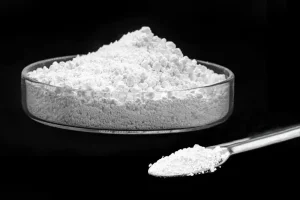
The industrial landscape of Milan and the broader Lombardy region has long served as the chemical heartbeat of Italy. As a key transit point for raw materials and refined industrial chemicals, Milan functions as a critical consumption and trading hub for the Nitrate Series. Nitrates, including Potassium Nitrate (KNO₃), Sodium Nitrate (NaNO₃), and Calcium Nitrate (Ca(NO₃)₂), represent a vital class of inorganic compounds. They are essential to key sectors like metallurgical heat treatment, specialized display glass fabrication, environmental water rehabilitation, and advanced agricultural fertilization.
In Milan's industrial zones and chemical parks, local factories rely on high-purity nitrates to support advanced manufacturing. For instance, the manufacturing of high-resolution displays and optical devices in Northern Italy's technology sectors requires high-purity potassium nitrate. This compound is critical for the chemical strengthening of glass through potassium-sodium ion exchange.
At the same time, Lombardy's agricultural sectors in the Po Valley demand specialized, highly soluble, and residue-free calcium ammonium nitrate. This ensures optimized nitrogen absorption while protecting the soil from acidification. These local industrial demands match global trends. Modern nitrate manufacturers must meet strict, zero-defect quality standards, optimize supply chain logistics, and implement ecological production methodologies.
On a global scale, the production of nitrate compounds is shifting towards ultra-high purification technologies. Historically, agricultural-grade nitrates dominated the volume share. However, the rise of Concentrated Solar Power (CSP) plants and thermal energy storage (TES) systems has created a surge in demand for solar-grade nitrates. Solar salt, a eutectic mixture typically composed of 60% sodium nitrate and 40% potassium nitrate, acts as a high-capacity heat transfer and storage medium, operating at temperatures exceeding 500°C.
As a leading global producer, Shanxi Vojin New Materials Co., Ltd. has been at the forefront of this industrial shift. Driven by a spirit of innovation since 2000, we manage a manufacturing footprint spanning approximately 1,000 acres. We maintain an annual production capacity of 600,000 tons of molten salts.
This massive scale helps us serve clients in over 40 countries, including European industrial centers like Milan. Our specialized purification processes reduce critical impurities—such as chlorides and sulfates—to trace levels (often under 0.01%). This is essential to prevent high-temperature corrosion in solar thermal receivers and industrial heat exchangers.
Eutectic molten salts for CSP solar plants, optimizing energy retention for Milan's green transitions.
High-purity potassium nitrate used for chemical strengthening bath in electronic glass manufacturing.
Advanced heat transfer fluids for coal conversion and municipal waste-to-energy plants in Lombardy.
Water-soluble fertilizers designed for precision drip irrigation systems in Lombardy's agricultural fields.
The technical evolution of nitrate synthesis is defined by the strict control of trace elements. In high-end applications, even minor concentrations of impurities can lead to major operational issues:
For Milanese glass factories, iron contamination must be strictly avoided. Iron impurities in potassium nitrate baths can cause yellow tinting in display screens. By using high-grade recrystallized potassium nitrate, manufacturers can maintain maximum optical transparency.
In the agricultural sector, the focus is on soil compatibility. Our calcium ammonium nitrate contains water-soluble calcium, which stabilizes plant cell walls and prevents physiological disorders like blossom-end rot. It dissolves completely without leaving insoluble residues that can clog drip irrigation nozzles.
Modern industrial operations must align with strict environmental frameworks, including Europe's Green Deal. The nitrate series plays a direct role in carbon reduction efforts:
Many European factories are replacing fossil-fuel-burning boilers with molten salt heat storage systems. By storing excess electricity from wind and solar during off-peak hours in molten nitrate salts, factories can generate high-temperature process steam on demand. This approach helps lower carbon emissions from heavy industrial operations.
Traditional nitrogen fertilizers release nutrients rapidly, leading to groundwater pollution and soil degradation. Our water-soluble nitrate series is formulated for precision agricultural applications. This enables controlled nutrient delivery, which minimizes environmental runoff and improves crop absorption efficiency.
Get in touch with our technical sales team for specialized custom blends, logistical routing to Milan, and updated volume pricing.
Send Inquiry NowIntegrated export operations and reliable quality control processes guarantee consistent delivery of high-purity chemical compounds.
With an annual output of 600,000 tons of molten salts, we can reliably meet large-scale industrial orders.
Our experienced technical and service team provides quick, expert support for all inquiries.
We offer a broad range of products, including KNO₃ and NaNO₃, to meet diverse customer requirements across different industries.
 VOJIN
VOJIN