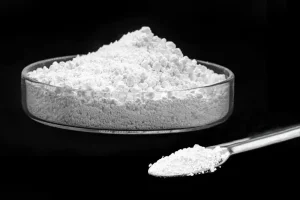
High-purity industrial inputs engineered for thermal efficiency, advanced glass production, and precision agrifood processing systems in Northern France.
Exploring the commercial dynamics, regulatory shifts, and technological mandates shaping industrial chemistry in Northern France.
The Paris metropolitan area (Île-de-France) stands as one of the most sophisticated consumer markets for industrial raw materials and chemical by-products in Europe. While historical manufacturing has decentralized outward from the city center, critical hubs along the Seine corridor (including Gennevilliers, Vitry-sur-Seine, and industrial zones surrounding Le Havre and Rouen) remain primary nodes of material transformation and logistics distribution. The regional economy is driven by an intense commitment to carbon neutrality under the "Plan Climat de Paris" and EU circular economy directives, which explicitly prioritize low-impact, recycled, or highly optimized by-products over primary mined resources.
For procurement directors and production managers in Northern France, securing raw materials such as industrial-grade potassium carbonate, water-soluble nitrates, and high-purity sulfates is no longer just about cost-per-tonne. It requires deep alignment with the **ECHA (European Chemicals Agency)** guidelines and a transparent supply chain that can demonstrate lower carbon intensity per unit produced. As local by-product availability remains highly volatile due to fluctuating outputs from regional coal-conversion facilities and heavy metallurgical plants, international supply partnerships featuring reliable **Industry 4.0** factories have emerged as essential for strategic business continuity.
Utilizing high-grade secondary chemicals reduces the environmental footprint of regional glassworks and polymer synthesis plants in Île-de-France.
Leveraging multi-modal logistics links from major coastal ports directly into Paris-based industrial processing facilities.
Ensuring trace heavy metal contents remain well below European regulatory limits, guaranteeing chemical consistency.
How next-generation chemical engineering is driving thermodynamic efficiency and agricultural optimization.
The transition from fossil-fuel reliance to decarbonized energy storage has catalyzed rapid developments in **Molten Salt Technology** and advanced inorganic syntheses. Historically used as fertilizer bases, nitrate and potassium chemistry are now at the center of large-scale Thermal Energy Storage (TES) systems. By utilizing tailored eutectic mixtures of potassium nitrate ($KNO_3$) and sodium nitrate ($NaNO_3$), industrial plants can store excess heat generated from concentrated solar fields or industrial waste-heat loops, releasing it on demand to generate superheated steam or run turbines.
| Chemical Compound | Primary Technical Property | Industrial Application in Paris Market | Purity Threshold Requirements |
|---|---|---|---|
| Potassium Carbonate ($K_2CO_3$) | Excellent fluxing agent, high soluble alkalinity | Precision optics, specialty glassware, food processing | ≥ 99.0% (Industrial), ≥ 99.5% (Food-Grade) |
| Potassium Nitrate ($KNO_3$) | Thermal stability up to 550°C, highly soluble oxidizer | Molten salt solar loops, agricultural nutrients | ≥ 99.8% (Solar Grade), ≥ 98.5% (Agri Grade) |
| Lithium Carbonate ($Li_2CO_3$) | Specific heat capacity catalyst, glass melt modifier | Battery precursor, high-strength ceramics | ≥ 99.2% (Technical / Battery grade) |
| Monoammonium Phosphate (MAP) | High phosphorus pentoxide ($P_2O_5$) density | Precision drip fertigation, fire retardant formulations | Fully water-soluble, trace heavy metal control |
Looking toward the 2030 horizon, the demand for ultra-pure inorganic salts is expected to increase exponentially. Evolving technical roadmaps indicate that even minor impurities—such as trace chlorides or magnesium compounds—can cause accelerated corrosion in high-temperature heat exchangers or result in crystallization defects in specialized optical glass. Consequently, the role of Vojin New Materials as a certified manufacturer of both primary chemicals and technical-grade by-products is crucial to supporting these demanding technological steps.
Targeted chemical solutions matching French national initiatives in energy, digital display tech, and precision agriculture.
Providing specialized molten salt chemical formulations for large-scale concentrated solar projects and industrial waste-heat recycling plants throughout Western Europe. Our salts exhibit remarkable thermal stability under extreme temperature cycling.
Delivering high-purity potassium carbonate crucial for the production of tough aluminosilicate glass screens, advanced display panels, and high-clarity scientific optics for regional technology companies.
Supplying fully water-soluble, zero-residue fertilizers (such as MAP and organic-mineral trace elements) for greenhouse networks and precision viticulture in the adjacent French agricultural basins.
Over two decades of chemical manufacturing excellence, driving global reliability and clean energy transition.
Our commitment is centered on delivering dependable products and services with a quality distinction in the thermal energy storage, water-soluble fertilizer, and advanced glass manufacturing industries globally. By linking automated synthesis plants directly with deep-water port systems, we manage raw materials transit times effectively to minimize risk for international procurement units.
The contemporary chemical supply chain requires more than just high-capacity outputs; it demands the synthesis of smart manufacturing technologies to guarantee product purity and stable prices. At our production base in Shanxi, we utilize state-of-the-art automated crystallization lines, DCS (Distributed Control Systems) for real-time quality monitoring, and inline spectroscopic validation systems to eliminate human error during processing. This unified infrastructure ensures that every batch of Potassium Carbonate or Potassium Nitrate conforms to rigorous chemical specifications before packaging.
Moreover, the integration of smart warehouses and optimized container dispatch systems allows Vojin New Materials to offer seamless logistics solutions. By coordinating directly with China's largest freight ports, we can buffer international shipping fluctuations and maintain a reliable buffer stock for our regular clients. This level of supply chain stability is highly valued by partners in the Paris market who operate under strict **Just-In-Time (JIT)** manufacturing schedules.
Compliance is a critical pillar of our chemical business model. Operating within the European Economic Area demands complete adherence to the **EU REACH Regulation (EC No 1907/2006)**. Without valid REACH registration or only-representative representation, industrial imports risk delays at customs, potentially stalling downstream operations. Vojin New Materials guarantees that all relevant substances, including our high-demand nitrates and carbonates, are fully REACH compliant. This protection ensures that French companies can source our materials with complete confidence in legal continuity, avoiding customs risks at ports of entry such as Le Havre or Marseille.
Technical and logistical insights for chemical procurement officers sourcing materials for the French market.
Explore our full catalog of specialized mineral salts, designed for international shipping and high-durability industrial applications.
 VOJIN
VOJIN