High-purity industrial and agricultural chemical formulations engineered for global performance standards.
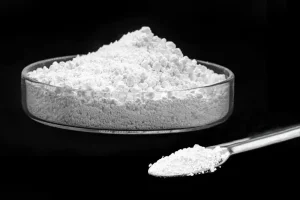
Calcium Nitrate, chemically represented as Ca(NO₃)₂, is a highly hygroscopic, inorganic salt that serves as a cornerstone compound across multiple global industries. When optimized for complete solubility in water, it becomes an indispensable resource for modern precision agriculture, industrial manufacturing, and environmental engineering.
The water-soluble variant typically exists as a tetrahydrate form [$\text{Ca(NO}_3)_2 \cdot 4\text{H}_2\text{O}$] or a complex double salt containing ammonium nitrogen. The key differentiator of high-grade water-soluble calcium nitrate is its rapid dissolution rate and the absolute absence of insoluble residues. This is achieved through advanced filtration and crystallization processes during manufacturing, ensuring that when the crystals or prills are introduced to water, they dissociate completely into calcium ions ($\text{Ca}^{2+}$) and nitrate ions ($\text{NO}_3^-$).
From a chemical perspective, the high solubility (typically exceeding $1200 \text{ g/L}$ at $20^\circ\text{C}$) allows for the preparation of highly concentrated stock solutions. This characteristic is vital for automated fertigation systems and industrial dosing equipment, where line clogging and precipitate formation can cause catastrophic operational failures.
The global market for water-soluble calcium nitrate is experiencing robust growth, driven by the transition toward high-efficiency farming and sustainable industrial practices. As agricultural sectors worldwide grapple with soil degradation, water scarcity, and the demand for higher crop yields, the adoption of drip irrigation and hydroponics has surged. Water-soluble calcium nitrate is the preferred nitrogen-calcium source for these systems due to its immediate bioavailability.
Geopolitically, China stands as the dominant manufacturing hub for this compound. Chinese manufacturers leverage integrated supply chains, abundant raw material access (limestone and nitric acid), and state-of-the-art production facilities to supply over 40% of the global demand. Regions such as North America, Latin America, and Europe rely heavily on Chinese exports to sustain their agricultural and construction sectors.
Furthermore, the industrial grade of water-soluble calcium nitrate is seeing increased demand in wastewater treatment facilities across Europe and North America. It acts as a highly effective agent in preventing the formation of hydrogen sulfide ($\text{H}_2\text{S}$) gas in municipal sewer lines, addressing both odor control and infrastructure corrosion concerns.
The manufacturing of water-soluble calcium nitrate is moving away from energy-intensive, high-emission processes toward green chemical engineering. The traditional neutralization reaction between nitric acid and calcium carbonate is being optimized using closed-loop systems that capture and recycle carbon dioxide emissions.
The Anti-Caking Revolution: Because calcium nitrate is highly hygroscopic, it tends to absorb moisture from the air and cake during transport. The future technical roadmap focuses on biodegradable, organic anti-caking agents that maintain the product's free-flowing nature without compromising its water solubility or introducing toxic residues into agricultural soils.
Integration with Molten Salt Technologies: As concentrated solar power (CSP) plants expand, the demand for high-purity nitrates (including calcium nitrate) as thermal energy storage media is growing. Future manufacturing lines are being designed to switch flexibly between agricultural-grade water-soluble prills and ultra-high-purity molten salt components.
Case Study 1: Precision Fertigation in Arid Regions
In the Middle East, a large-scale agricultural enterprise faced severe emitter clogging in their drip irrigation systems due to low-quality calcium fertilizers. By switching to Shanxi Vojin's fully water-soluble calcium nitrate, the farm eliminated nozzle maintenance downtime, reduced water consumption by 15%, and increased tomato yields by 22% due to the immediate availability of calcium and nitrate-nitrogen.
Case Study 2: Rapid Concrete Curing in Cold Climates
A major construction project in Northern Europe required concrete pouring at temperatures below $5^\circ\text{C}$. The addition of our industrial-grade water-soluble calcium nitrate acted as a non-corrosive accelerator, reducing the setting time by 40% without compromising the structural integrity of the steel reinforcement, showcasing a clear advantage over traditional chloride-based accelerators.
Leveraging decades of manufacturing excellence, advanced technology, and global supply chain reliability.
Integrated experience in global exporting operations. We guarantee consistent, high-purity chemical formulations that meet international regulatory standards.
With an annual output of 600,000 tons of molten salts and nitrates, we ensure stable supply chains and competitive bulk pricing for global distributors.
Our dedicated engineering and service teams provide rapid responses, custom formulation adjustments, and on-site application guidance.
Our years of manufacturing experience and refined products provide you with better performance.
Providing high-performance solutions across energy, electronics, agriculture, and heavy industry.
Stay updated with the latest advancements in molten salt energy storage and chemical technologies.
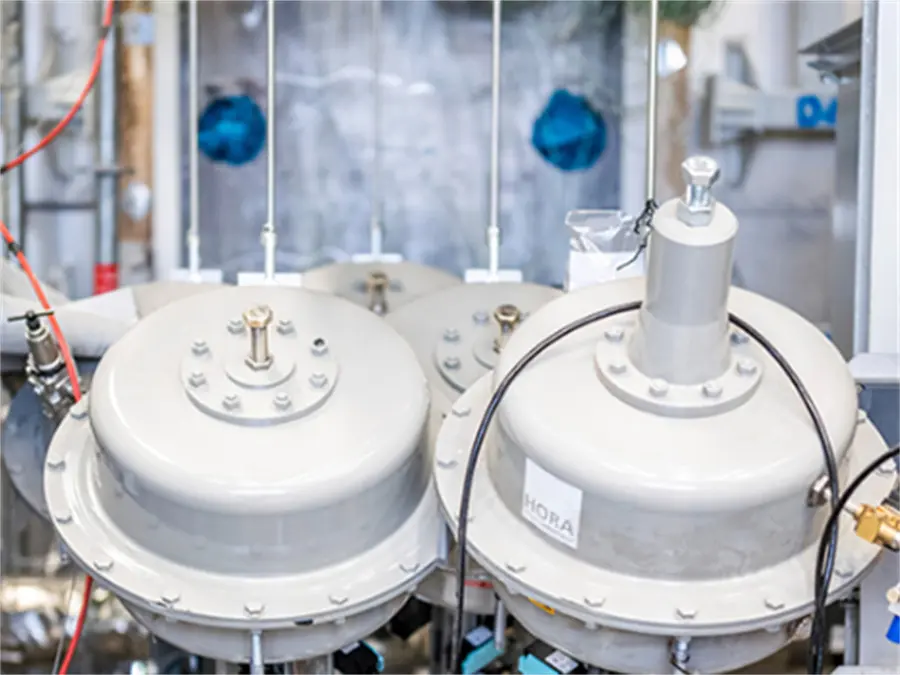
The technology can operate at higher temperatures, which has an impact on the efficiency of power generation systems...
Read Article →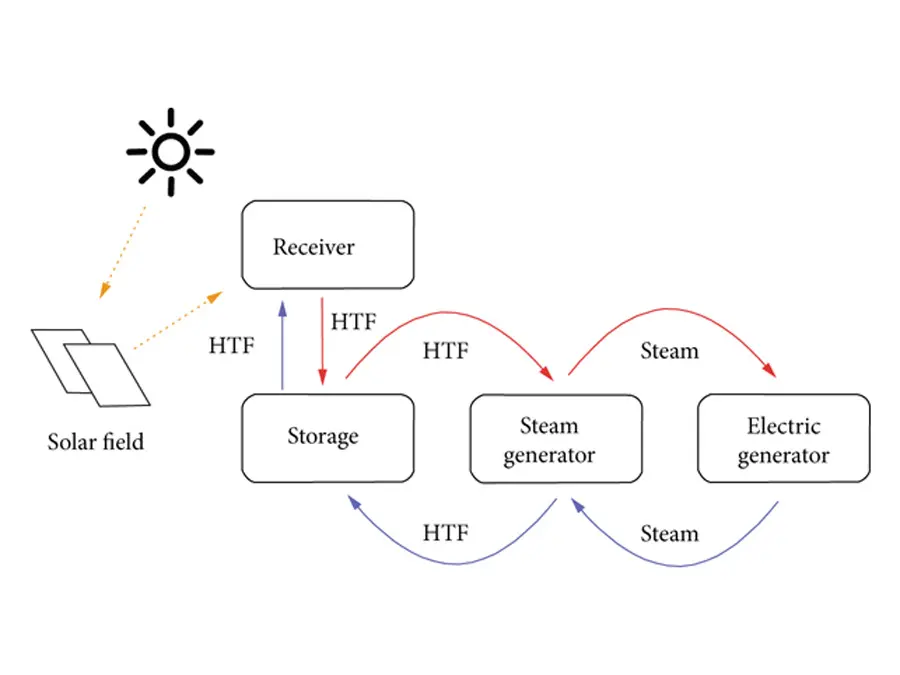
A concentrated solar power plant converts solar energy to electricity. It is based on advanced nitrate salt formulations...
Read Article →
Molten salt energy storage has emerged as a promising solution for enhancing the efficiency of renewable grids...
Read Article →Expert answers to common technical and commercial queries regarding water-soluble calcium nitrate.
For many years, we have successfully responded to the requirements of reputed customers in the market.

Explore our full range of industrial salts, water-soluble fertilizers, and chemical intermediates.
 VOJIN
VOJIN